Ngorongoro Conservation Area
About Ngorongoro Conservation Area
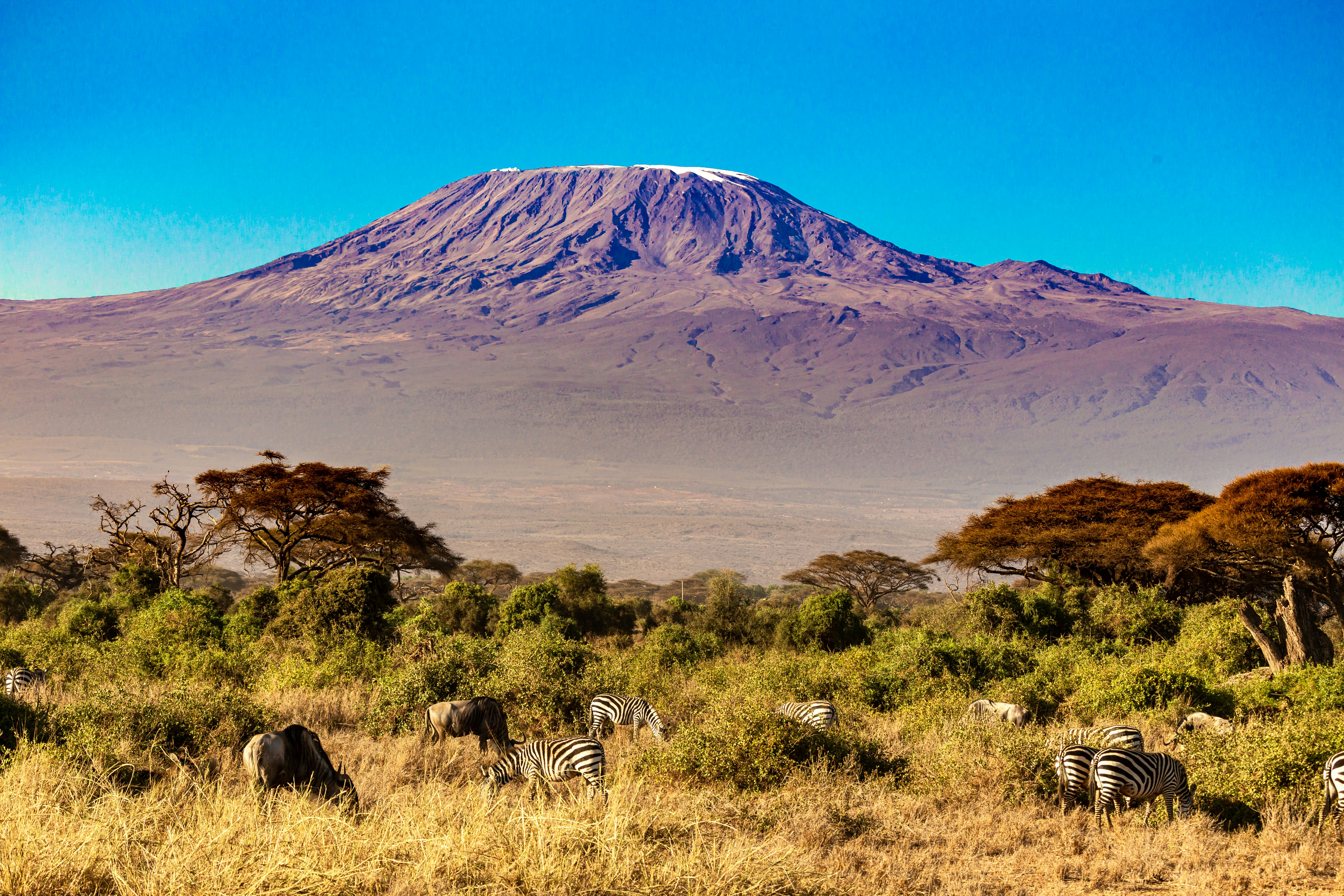
Stand atop the Roof of Africa and touch the sky! Mount Kilimanjaro, rising majestically to 5,895 meters above sea level, is not only Africa's highest peak but also the world's tallest free-standing mountain – a colossal volcanic massif that dominates the landscape for hundreds of kilometers in every direction. This iconic mountain, capped with ancient glaciers despite sitting just three degrees south of the equator, represents one of the world's most accessible high-altitude challenges, beckoning adventurers from every corner of the globe to attempt what becomes, for many, the achievement of a lifetime.
What makes Kilimanjaro truly extraordinary is that it's a journey through five distinct climate zones, each with its own unique ecosystem, all compressed into a single ascent. You begin your trek in lush montane rainforest at around 1,800 meters, where the air is thick and humid, black and white colobus monkeys leap through dense canopies, and the calls of exotic birds echo through the mist. Ancient trees draped in moss and lichens create a prehistoric atmosphere as you climb through this verdant wonderland. As you ascend, the forest gradually gives way to heath and moorland around 3,000 meters, a surreal landscape dominated by giant heathers and bizarre-looking giant groundsels and lobelias – endemic plants that have adapted to high-altitude conditions and look like something from a Dr. Seuss book.
Continuing upward, you enter the alpine desert zone above 4,000 meters, where vegetation becomes sparse and the landscape transforms into an otherworldly expanse of volcanic scree, ancient lava flows, and wind-sculpted rock formations. The air grows noticeably thinner, and each step requires more effort as oxygen levels drop. Finally, you reach the arctic summit zone above 5,000 meters, where glaciers cling to the volcanic cone despite decades of recession, and permanent ice creates a surreal contrast to the African plains visible far below.
The ascent to Uhuru Peak, the highest point on Kibo's crater rim and the summit of Africa, typically takes five to nine days depending on your chosen route. The most popular routes include the Marangu Route, nicknamed the "Coca-Cola Route" for its relative ease and hut accommodations; the scenic Machame Route, known as the "Whiskey Route" for its more challenging terrain; the remote and beautiful Lemosho Route offering spectacular vistas; the gentler Rongai Route approaching from the north; and the demanding but rewarding Northern Circuit, the longest route providing maximum acclimatization time and circumnavigating the mountain for panoramic views.
No technical mountaineering skills are required to climb Kilimanjaro – it's a trek, not a climb – making this giant accessible to determined individuals with good fitness and mental resolve. However, don't underestimate the challenge. Altitude is the great equalizer on Kilimanjaro; summit success rates vary from 45% to 90% depending on the route and duration, with altitude sickness being the primary reason climbers turn back. The key to success lies in proper acclimatization, following the mountaineers' golden rule: "climb high, sleep low."
The final push to the summit typically begins around midnight from your high camp at approximately 4,700-5,000 meters. In the darkness, wearing headlamps, you join a snaking line of climbers ascending the steep scree slopes or switchbacks leading to Stella Point on the crater rim. The climb is brutally difficult – bitter cold (temperatures can drop to minus 20 degrees Celsius), thin air making each step an effort, and the mental challenge of pushing through exhaustion when every fiber of your being wants to stop. But then, as dawn breaks, you reach Uhuru Peak just as the first rays of sunlight illuminate the glaciers and reveal a vista that seems to encompass all of Africa.
Standing at 5,895 meters with clouds far below your feet, the curvature of the Earth visible on the horizon, and glaciers glowing in the morning light, you experience a moment of pure triumph that will define you forever. Many climbers describe overwhelming emotions at the summit – tears of joy, profound sense of achievement, spiritual awakening. You've conquered Africa, proved to yourself that determination can overcome seemingly impossible challenges, and created memories that will sustain you for life.
But Kilimanjaro offers more than personal achievement. The mountain holds deep cultural significance for the Chagga people who have lived on its slopes for centuries, cultivating coffee and bananas in the rich volcanic soil. Local guides and porters, many of whom have summited hundreds of times, share their knowledge, songs, and stories, making your climb a cultural exchange as well as an athletic challenge. The camaraderie that develops among climbing groups, the encouragement shared during difficult moments, and the celebrations at the summit create bonds that often last long after you've descended.
The descent, though easier on the lungs, is hard on the knees and requires concentration as you navigate loose scree and steep paths. But as you drop back through the climate zones, watching the vegetation green up around you and feeling the air thicken with oxygen, you carry with you the satisfaction of having achieved something truly remarkable.
Beyond the standard trekking routes, Kilimanjaro offers opportunities for those seeking even greater challenges. Experienced mountaineers can attempt technical climbs on the Western Breach route, scaling near-vertical ice walls and navigating crevasses. The crater itself, rarely visited by standard trekkers, contains the dramatic Ash Pit and the Reusch Crater, still showing signs of volcanic activity in steaming fumaroles.
Mount Kilimanjaro also plays a crucial role in regional ecology and climate. The glaciers, though receding, feed numerous rivers that provide water to millions of people and animals in the surrounding areas. The mountain creates its own weather patterns, with moist air from the Indian Ocean rising and cooling against its slopes, creating the rainfall that sustains the forests below.
Whether you're an experienced trekker seeking a new challenge, a bucket-list adventurer wanting to stand atop Africa, a nature enthusiast fascinated by dramatic ecological transitions, or someone looking to prove something to yourself, Kilimanjaro delivers an experience that transcends mere mountain climbing. This is a journey of transformation, a test of will and determination, a cultural immersion, and an encounter with one of the world's most beautiful and iconic mountains. When you return home and people ask about your travels, you won't just tell them you visited Tanzania – you'll tell them you conquered Kilimanjaro, and that achievement will forever set you apart.
Best Time to Visit: January to March and June to October provide the best climbing conditions with clear skies, dry trails, and spectacular summit views; January to March is particularly beautiful with excellent visibility and fewer climbers, while June to October is the most popular period with reliable weather; avoid the long rains (April-May) and short rains (November) when trails become muddy and slippery, though these periods offer solitude and dramatically lower prices for adventurous climbers.
Related Destinations
-
Mount Kilimanjaro National Park
View Details -
Zanzibar Archipelago
View Details -
Serengeti National Park
View Details